L-Shaped vs Straight Standing Desk: Which Fits Your Room? (October 2026)
An L-shaped desk suits a corner and gives you connected work zones; a straight desk often fits a narrow room more easily. Measure the full footprint and leave space to move before you choose.
On this page (12 sections)
- L-shaped desk vs straight: which fits your room?
- Which desk gives you more usable work surface?
- How does desk shape affect your daily movement?
- Can both desk shapes switch between sitting and standing?
- What can each shape hold around your computer?
- Which standing desk shape is easier to place?
- When is a straight desk the better choice?
- When does an L-shaped standing desk make more sense?
- Side-by-side specs for the L-shaped and straight desks
- How to choose between an L desk and a straight desk
- Three desks for an L-shaped or straight setup
- Which shape should you choose for your room?
An L-shaped desk suits a corner and gives you connected work zones; a straight desk often fits a narrow room more easily. Measure the full footprint and leave space to move before you choose.
The choice between an L-shaped desk and a straight desk comes down to room shape, surface needs and how you work. An L gives you two connected sections; a straight desk can take up less depth and leave more open floor.
We compared the dimensions and features of 1 straight electric desk and 2 L-shaped electric desks. Use the numbers as examples, then measure your own room and equipment.

L-shaped desk vs straight: which fits your room?
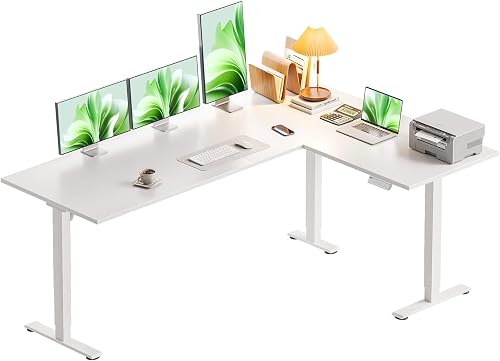
A straight desk is usually easier to fit against a wall, while an L-shaped desk can make good use of a clear corner. The return on an L extends farther into the room, so check its full depth as well as the width of each side.
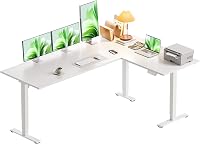
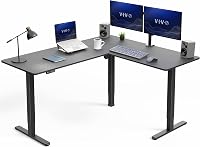
The Furmax 55 Electric Desk has a straight 55 x 24 in top. The Casaottima 63 L-Shaped Desk measures 63 x 47 in, and the Fezibo 63 x 55 L-Shaped Desk measures 63 x 55 in.
Those dimensions show the space trade-off. The straight desk is 24 in deep, while the two corner desks have overall depths of 47 and 55 in.
How much corner space does an L-shaped desk need?
An L-shaped desk needs enough room for its full footprint, along with space for your chair and walking path. The Casaottima’s return can be installed on the left or right, which helps match the layout to a corner.
For an L-shaped desk, measure both wall runs and the open floor in front of them. Our guide to L-shaped standing desk dimensions explains what to check before you decide where it will go.
The Furmax needs less depth than these corner desks, but it still needs room for a chair and the things you use at work. If the room is tight, compare options in our guide to 60-inch standing desks.
Which desk gives you more usable work surface?
An L-shaped desk gives you two connected sections, so you can separate tasks or keep equipment off your main work area. A straight top gives you one row of space, which can be enough for a computer and everyday work items.
The Furmax has a 55 x 24 in desktop and a cable hole. Its desktop is made of two spliced boards, so it is not a single piece.
The Casaottima has a 63 x 47 in L-shaped footprint, with desktop space for multiple monitors, a laptop or paperwork. The Fezibo measures 63 x 55 in overall, giving it the deepest footprint of these examples.
Think about what you’ll place on the desk each day. A second monitor, printer or work documents may use more room than a laptop alone, but a larger top also takes up more of the room.
Where should each work zone go on an L-shaped vs straight desk?
An L-shaped desk lets you arrange equipment across two sides. You might keep your main screen and keyboard on one section, then use the return for notes or other equipment.
A straight desk keeps everything in one line. It may suit a setup where you want a clear wall behind the screen and don’t need a separate side surface.
How does desk shape affect your daily movement?
The shape affects how much floor stays open around the desk. A straight desk has a shallower footprint in these examples, while an L-shaped desk reaches farther into the room.
Before you buy, mark the footprint with painter’s tape. Sit in the space as you normally would, and check that you can pull your chair back and walk around without bumping into the desk.
Also check nearby doors, drawers and cabinets. The desk should fit when those open, not just when the room is empty.
If your desk needs to fit in a tight spot, our guide to the best small standing desks covers compact options. For a corner setup, see our best corner standing desks.
Can both desk shapes switch between sitting and standing?
Both shapes can offer electric height adjustment, so desk shape alone doesn’t determine whether a model supports sitting and standing. Compare each desk’s height range and controls with your needs.
The Furmax adjusts from 28.7 to 46.4 in and has two memory keys. Casaottima gives a 28.4–45.7 in adjustment range and a memory keypad, while Fezibo adjusts from 28.3 to 46.8 in with two preset buttons.
Check that the desk can reach a comfortable height for you while sitting and standing. Match the range to your chair, keyboard position and monitor setup.
Our guide to choosing an electric standing desk covers other details to compare, such as the controls, frame and fit for your work routine.
What can each shape hold around your computer?
The L-shaped models offer space for multiple screens and other equipment, while the Furmax provides a straight 55 x 24 in top for computer equipment and office supplies. Your actual setup depends on equipment size, total weight and how much open space you want.
Casaottima’s large top accommodates multiple monitors, laptops or gaming setups. Fezibo’s 63 x 55 in L-shaped surface also provides room to spread out home office or gaming equipment.
The Furmax offers one straight work surface with a cable hole. Its size may suit a monitor and laptop if their bases fit, though it has no separate return for spreading out other items.
Count your equipment, then measure the space each item needs. Include room for a keyboard, mouse and anything you reach for often.
Which standing desk shape is easier to place?
A straight desk is often simpler to position because it needs one wall run and can have less depth. An L-shaped desk can fit neatly into a corner, but its return needs enough clearance.
The Casaottima’s reversible design lets you put the return on the left or right. That can help when one side of your corner has a doorway, a window or another obstacle.
The Fezibo has a 63 x 55 in L-shaped footprint, so it needs a broad corner area. Check the room measurements before assembly, since moving a large desk after it is built can be difficult.
For more corner options, browse our best L-shaped standing desks.
When is a straight desk the better choice?
Pick a straight desk when your available wall space is long enough, but the room has limited depth. A 55 x 24 in desk like the Furmax gives you one work surface without the deeper return of an L-shaped model.
A straight desk may also suit a room where you want open floor around the workstation. Its shallower footprint can leave more room for a chair or other furniture.
The trade-off is that you have no separate side surface. If your equipment or work habits need distinct zones, an L-shaped desk may fit better.
When does an L-shaped standing desk make more sense?
Choose an L-shaped desk when you have an open corner and want room to spread work across two connected sections. It can suit multiple screens or separate computer work from paperwork, provided the return doesn’t block movement.
A reversible return can make it easier to adapt the desk to your corner. Casaottima offers that layout choice, while Fezibo’s 63 x 55 in footprint provides a deeper example for a room with more floor space.
The extra work zone is useful only if you can move around it comfortably. Measure both sides of the L and the floor in front before you pick one.
Side-by-side specs for the L-shaped and straight desks
The Furmax has the shallowest footprint, while Casaottima and Fezibo offer L-shaped layouts. The table compares their dimensions and height ranges so you can match them to your room and workstation.
| Product | Best for | Shape | Size | Height range | Our score |
|---|---|---|---|---|---|
| Casaottima 63 L-Shaped Desk | a reversible corner setup | L-shaped, reversible return | 63 x 47 in | 28.4–45.7 in | 8.6 |
| Furmax 55 Electric Desk | a straight wall setup | Straight | 55 x 24 in | 28.7–46.4 in | 8.0 |
| Fezibo 63 x 55 L-Shaped Desk | a broad work surface | L-shaped | 63 x 55 in | 28.3–46.8 in | 7.7 |
The Furmax takes the least depth in this group at 24 in. The Casaottima and Fezibo need 47 and 55 in of overall depth, respectively.
How to choose between an L desk and a straight desk
Start with room measurements, then decide how much surface you need. These checks can help narrow it down:
- Measure the available width and depth where the desk will sit.
- For an L, measure both sides of the corner and check the return’s direction.
- Leave space for the chair, walking path and nearby doors or cabinets.
- Measure your monitors, computer and other items to see how much desktop they need.
- Compare height ranges with your sitting and standing positions.
If you’re unsure, mark the footprint on the floor before you order. This makes the depth difference easier to picture.
Three desks for an L-shaped or straight setup
Choose Casaottima for a reversible corner layout, Furmax for a shallower straight setup, or Fezibo for a deeper L-shaped footprint. Our scores weigh specs and features against room fit and workspace needs.
Which shape should you choose for your room?
Choose a straight standing desk if your room is narrow or you want to keep more floor open. Choose an L-shaped desk if you have a clear corner and want two connected work zones.
For a corner layout, compare the L-shaped standing desk buying guide with your room measurements. If you’re still deciding whether a height-adjustable desk fits your routine, read whether a standing desk is worth it.
Before choosing an L-shaped or straight desk, check the footprint with your chair pulled out and nearby doors open. That check helps show whether the shape leaves enough room for everyday use.
Frequently asked questions
Is an L-shaped standing desk better than a straight desk?
An L-shaped standing desk is better when you have a corner to use and need separate work zones, while a straight desk is easier to fit along a wall or in a narrow room. Measure the desktop depth and width, plus room to pull your chair back and walk around it.
Does an L-shaped desk take more space?
Usually, an L-shaped desk needs more floor depth because its return extends farther from the wall. It can use a corner well, but you still need to compare both sides of the L against your room and allow clearance for your chair, drawers, doors and walking path.
Can a straight standing desk fit two monitors?
A straight standing desk can fit two monitors if their bases fit within the desktop and leave enough space for your other equipment. The Furmax 55 Electric Desk has a 55 x 24 in top, so measure your screens, keyboard and mouse area before choosing your layout.
Can you install an L-shaped desk on either side?
Some models have a reversible return, but the feature varies by desk. The Casaottima 63 L-Shaped Desk can be assembled with its return on the left or right, which gives you more choice when planning a corner setup, so choose the direction that leaves your walkway clear.
How do you measure a room for a standing desk?
Measure the wall or corner width and the available floor depth, then check the desk's full footprint against those numbers. Leave room for your chair, walking path and nearby doors or cabinets, and measure both sides of the L if you're considering a corner desk.